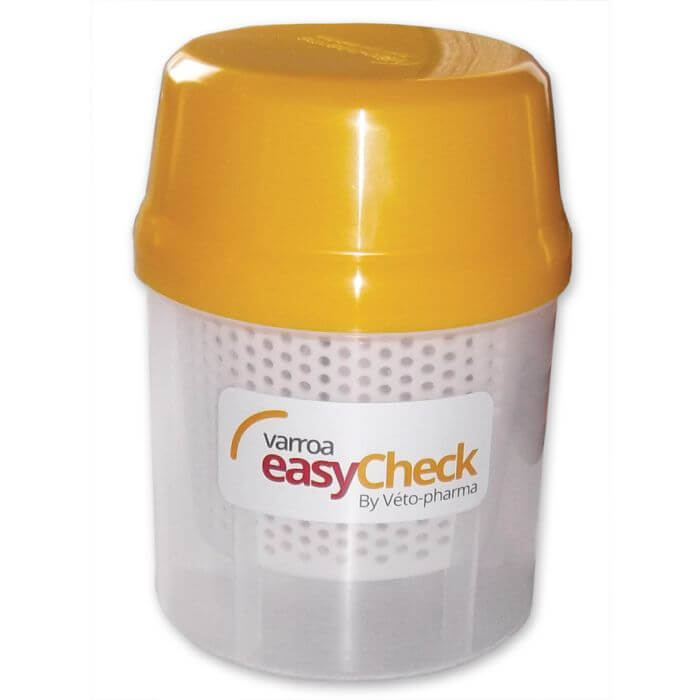
Varroa EasyCheck
Standardized cup system for alcohol wash mite counts. Know your infestation level before choosing a treatment.
- Standardized 300-bee sample for accurate mite percentage calculation
- Mesh-bottom inner cup separates mites from bees after washing
- Works with 90%+ isopropyl alcohol or Dawn Ultra dish soap solution
- Swirl method (per Randy Oliver) — more accurate than vigorous shaking
- More accurate than sugar rolls — alcohol wash is the gold standard
- Reusable — rinse and store between uses
Test Before You Treat
Treatment decisions made without mite count data waste money and risk building resistance. The Varroa EasyCheck makes the most accurate monitoring method — the alcohol wash — fast and standardized.
How to Use It (per Randy Oliver, ScientificBeekeeping.com)
Shake or brush approximately 300 bees (half a cup) from a brood frame — nurse bees carry the highest mite loads, so sample from open brood frames. Fill the outer cup with your wash liquid first: 90%+ isopropyl alcohol works best for immediate mite release, or use Dawn Ultra dish soap at 2 teaspoons per quart of water as a cheaper non-flammable alternative. 70% alcohol works but 90% is noticeably more effective.
Dump the bees into the liquid and snap the mesh cup lid on. Let sit for one full minute — roughly two-thirds of mites drop on their own during this time. Then gently swirl for about one minute, just enough to keep all bee bodies in motion. Do not shake vigorously — vigorous shaking is counterproductive because it stirs dislodged mites back up into the bees.
Hold the transparent outer cup up and count mites through the bottom. A 10x magnifying mirror held under the cup helps with identification. Calculate your percentage: mite count divided by 300, times 100.
Action Thresholds
- Below 1%: No immediate action — monitor monthly during build-up and bi-monthly at other times
- 1-2%: Plan your treatment — mite loads will increase as the colony expands
- 2% or higher: Treat now
These thresholds are guidelines. During the late summer critical window when winter bees are being raised, many experienced beekeepers treat at 1% or lower.


